
5 Common Catering Mistakes and How to Avoid Them
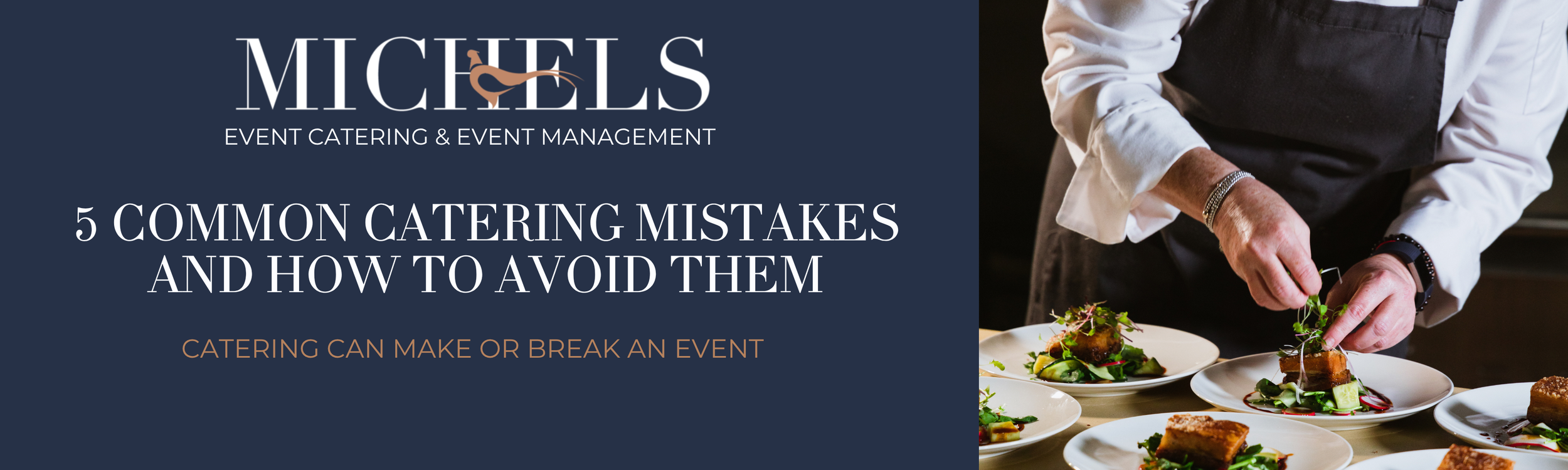
Catering can make or break an event. While great food elevates the experience, mistakes can lead to stress and unhappy guests. Here are five common catering pitfalls—and how to avoid them.
1. Underestimating Guest Numbers
Running out of food is a nightmare. Always confirm RSVPs and add a buffer for last-minute attendees.
2. Ignoring Dietary Restrictions
Failing to accommodate allergies or preferences can alienate guests. Offer inclusive menus with vegetarian, vegan, and gluten-free options.
3. Poor Timing
Food served too early or too late disrupts the flow. Work with your caterer to create a precise service timeline.
4. Lack of Variety
A limited menu can disappoint. Include a mix of flavors, textures, and styles to keep guests excited.
5. Choosing the Wrong Caterer
Not all caterers can handle large events or complex logistics. Partner with a licensed, experienced team like Michels Catering & Events for peace of mind.
Pro Tip
Communication is key. Share your vision, budget, and expectations clearly with your catering team.
Avoid catering mistakes and wow your guests. Contact us today to plan an event that’s flawless from start to finish.


The Ultimate Checklist for Hosting a Large-Scale Event
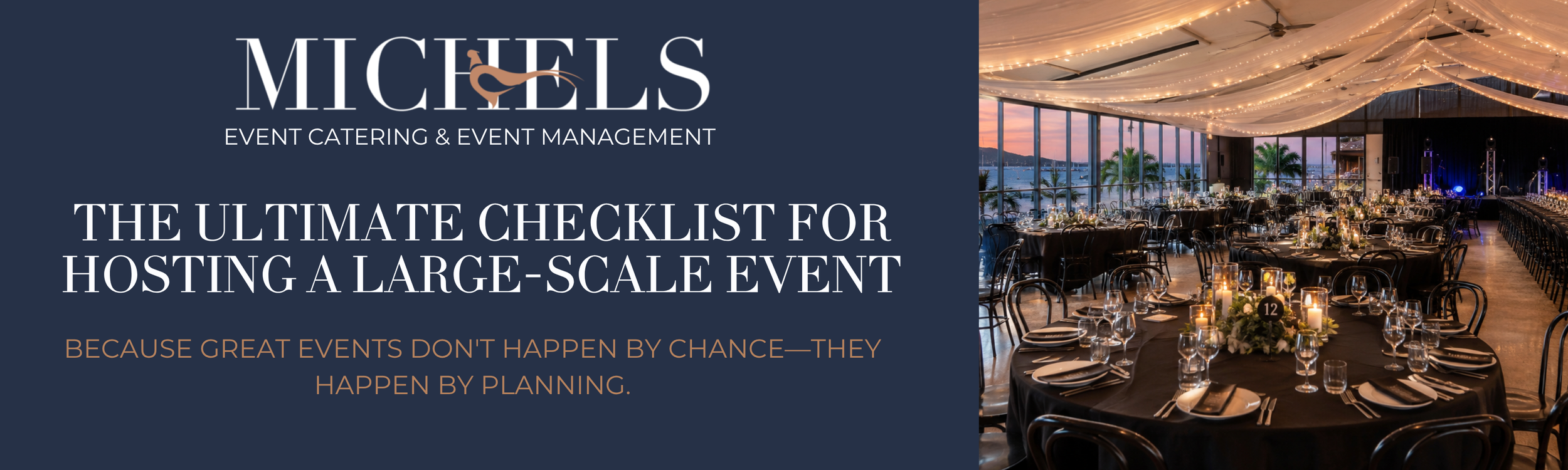
Planning a large-scale event—whether it’s a corporate gala, festival, or community celebration—can feel overwhelming. Success comes down to organisation, timing, and attention to detail. Here’s your ultimate checklist to ensure everything runs smoothly.
1. Define Your Goals
Start by clarifying the purpose of your event. Is it networking, fundraising, or celebration? Your goals will guide every decision.
2. Set a Realistic Budget
Include venue, catering, entertainment, staffing, and contingency funds. A clear budget prevents surprises later.
3. Choose the Right Venue
Consider capacity, accessibility, and amenities. For outdoor events, plan for weather contingencies like marquees or tents.
4. Secure Catering Early
Food and beverage are central to guest satisfaction. Partner with a full-service catering team that can handle large numbers without compromising quality.
5. Plan Logistics
Think about seating arrangements, AV equipment, signage, and parking. For events over 500 guests, detailed logistics are critical.
6. Create a Timeline
Map out everything—from setup and guest arrival to speeches and entertainment. Share this with all vendors and staff.
7. Staff Up
Hire experienced event managers and service staff. At Michels Catering & Events, we provide skilled teams for seamless execution.
8. Prepare for Dietary Needs
Offer vegetarian, vegan, and allergy-friendly options. Inclusivity matters.
9. Test Everything
Run through AV systems, lighting, and catering setups before the event day.
10. Have a Backup Plan
Weather, technical issues, or last-minute changes—anticipate challenges and prepare solutions.
Planning a large-scale event? Let Michels Catering & Events handle the details. Request a Quote today and make your event stress-free and unforgettable.
Seasonal Menus: Why Local Ingredients Make All the Difference
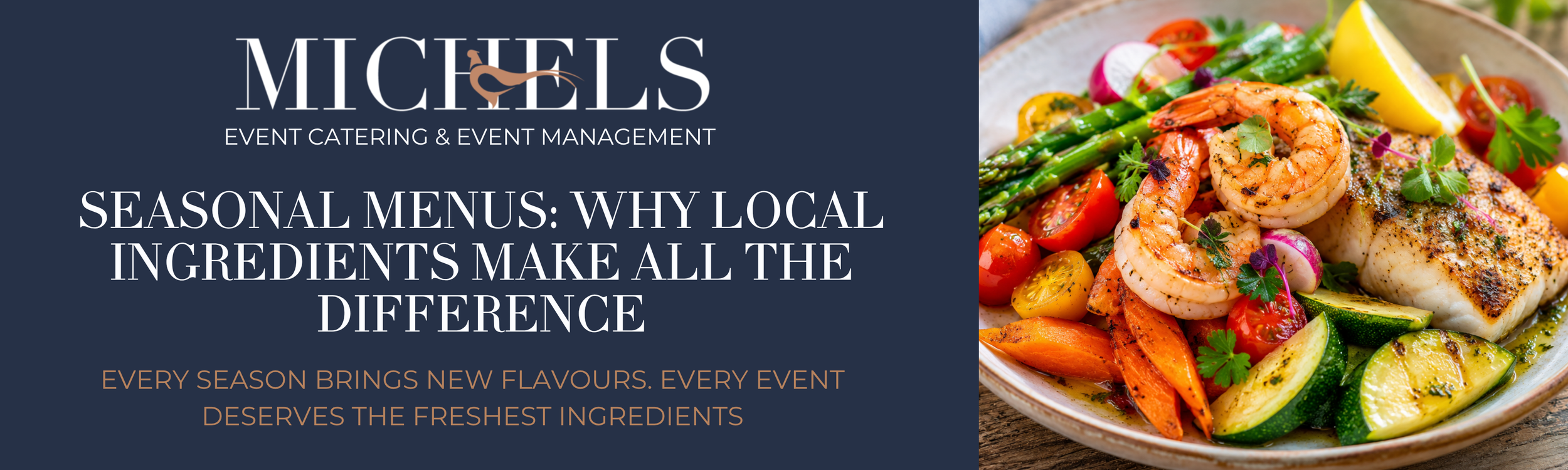
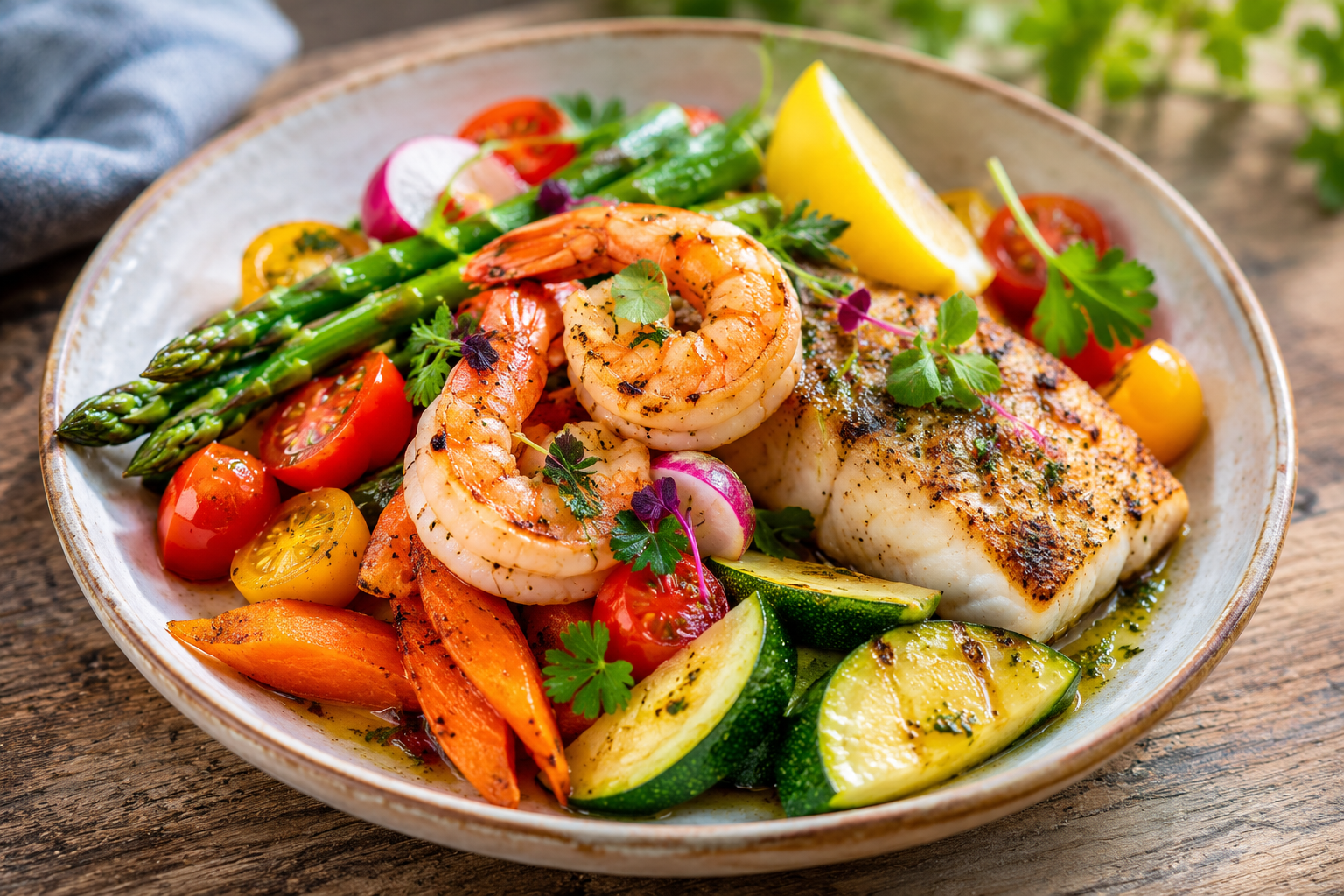
When it comes to catering, freshness matters. Seasonal menus not only taste better—they’re better for the planet and your guests. Here’s why Michels Catering & Events champions local, seasonal ingredients.
1. Superior Flavour
Ingredients harvested at their peak deliver unmatched taste and texture. Seasonal menus ensure every dish bursts with flavour.
2. Sustainability
Local sourcing reduces transportation emissions and supports North Queensland farmers. It’s good for the environment and the community.
3. Cost-Effectiveness
Seasonal produce is more abundant and affordable, allowing us to create exceptional menus without inflating costs.
4. Creative Variety
Changing seasons inspire new dishes and exciting flavour combinations. Your guests will love the variety and innovation.
5. Health Benefits
Fresh, seasonal ingredients are packed with nutrients, making your menu as wholesome as it is delicious.
Want a menu that’s fresh, flavourful, and sustainable? Request a Quote and let us design a seasonal menu that wows your guests.

How Michels Catering Champions Sustainability in Every Event

Sustainability isn’t just a trend—it’s a responsibility. At Michels Catering & Events, we believe every event can be extraordinary and environmentally conscious. Here’s how we integrate sustainable practices into everything we do.
1. Locally Sourced Ingredients
We partner with North Queensland suppliers to source fresh, seasonal produce. This reduces food miles, supports local businesses, and guarantees the highest quality for your menu.
2. Seasonal Menus
Our menus change with the seasons, ensuring dishes are crafted from ingredients at their peak. Seasonal dining means better flavour and a smaller environmental footprint.
3. Waste Reduction
From precise portion planning to composting organic waste, we minimise food waste at every stage. Leftovers? We work with local charities to donate surplus food whenever possible.
4. Eco-Friendly Packaging
We use biodegradable or recyclable packaging for takeaway items and avoid single-use plastics wherever possible.
5. Energy-Efficient Operations
Our kitchens and event setups prioritise energy efficiency, from equipment choices to transport logistics.
Planning an event with sustainability in mind? Contact us today to create an eco-friendly celebration without compromising on style or flavour.
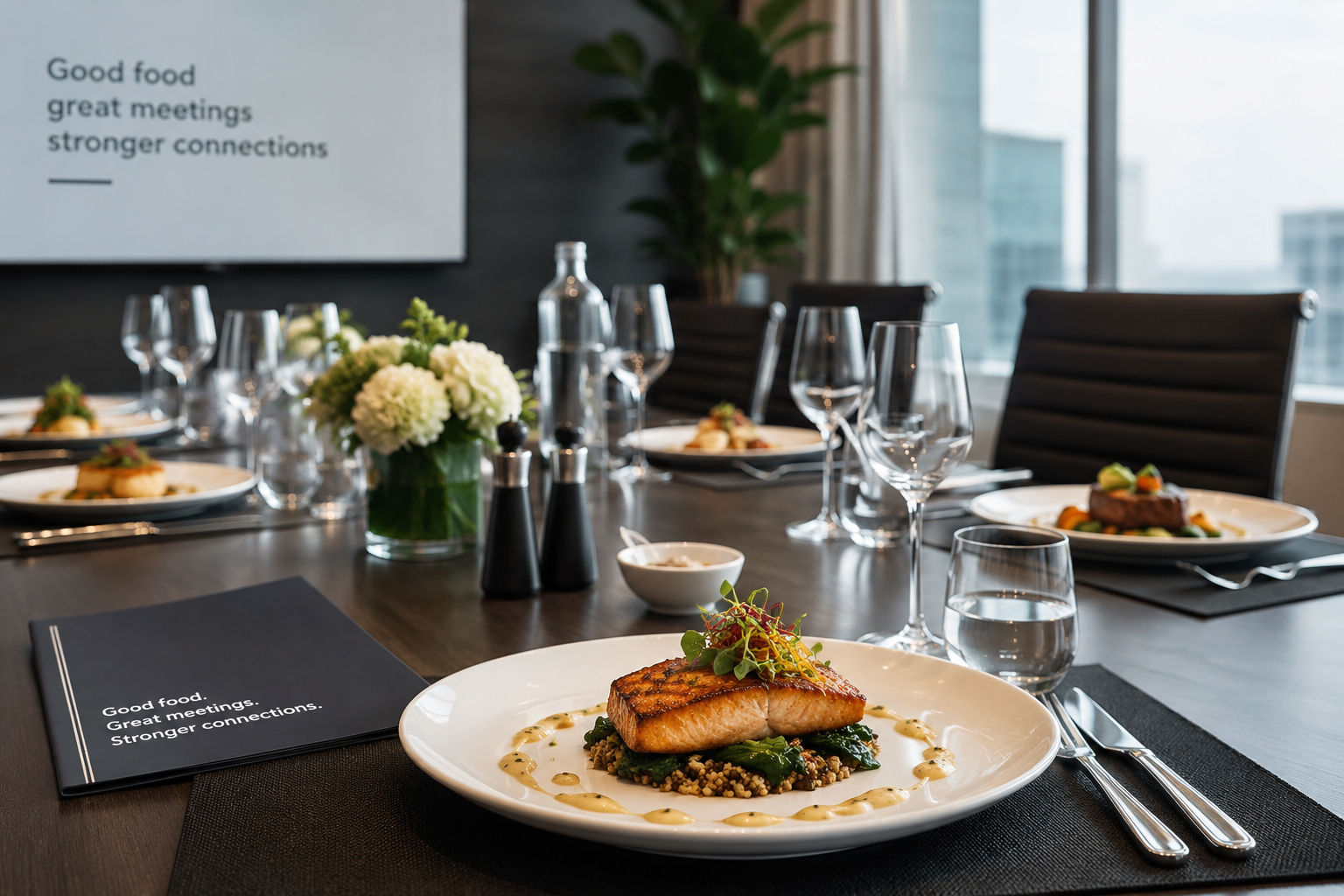
How to Choose the Perfect Menu for Your Corporate Event
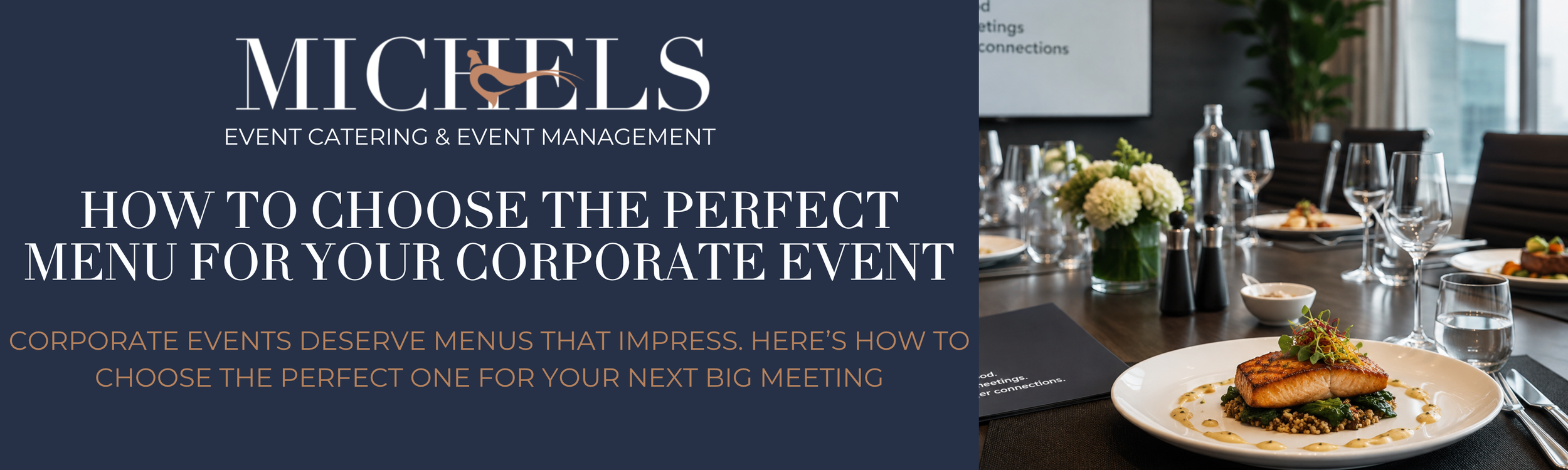
Corporate events are more than meetings—they’re opportunities to impress clients, reward employees, and build connections. The right menu sets the tone for success. Here’s how to choose a menu that fits your event and leaves a lasting impression.
1.Understand Your Audience
Consider dietary preferences and cultural backgrounds. Offering vegetarian, vegan, and gluten-free options ensures inclusivity.
2. Match the Event Style
Formal gala? Opt for plated fine dining. Networking event? Choose grazing tables and canapés for easy mingling.
3. Keep It Seasonal
Seasonal menus not only taste better but also support sustainability. Our chefs craft dishes using fresh North Queensland produce for maximum flavour.
4. Balance Variety and Simplicity
Offer enough choices to please everyone without overwhelming guests. A curated selection of mains, sides, and desserts works best.
5. Don’t Forget Drinks
Pair your menu with wine selections, craft beers, or signature cocktails. Beverage service completes the experience.
Pro Tip
Plan for timing. For full-day conferences, include morning tea, lunch, and afternoon refreshments to keep energy levels high.
Planning a corporate event? Let Michels Catering & Events create a menu that impresses. Request a Quote today and make your event unforgettable.

Small Business Is the Backbone of the Economy — So Why Does It Feel Like It’s About to Break?
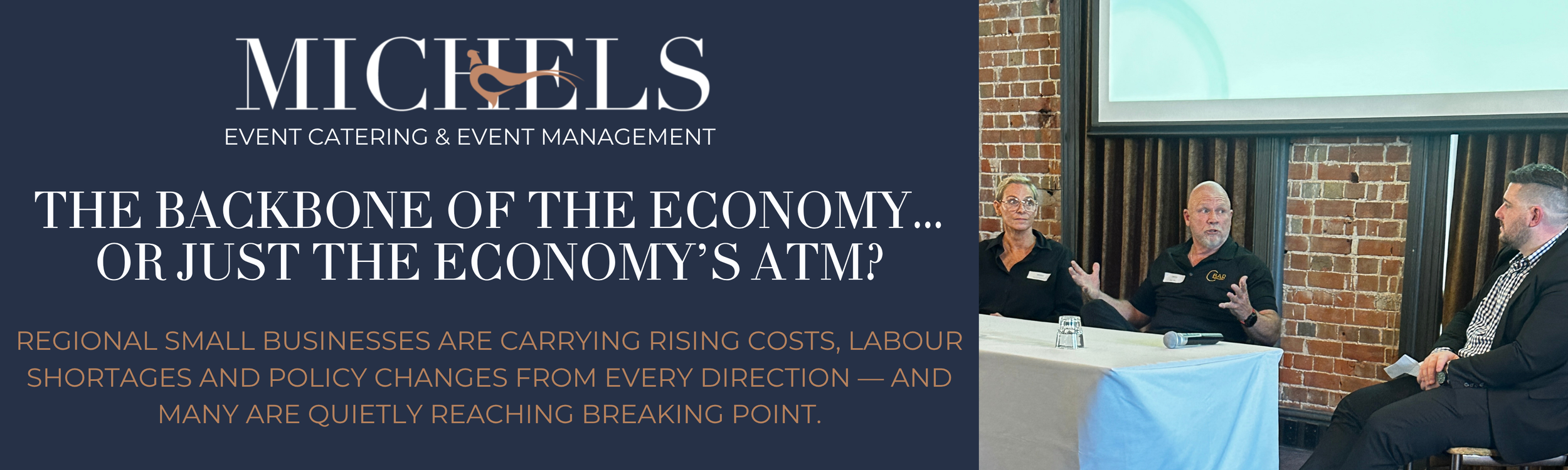
Last Friday, 22 May, the Townsville Chamber of Commerce hosted Minister for Small Business Steve Minnikin and, thanks to the Chamber, I was one of only two businesses invited to share our story.
The Minister delivered a polished, gregarious speech—exactly what you would expect from a seasoned politician. He spoke confidently, held the room’s attention and mentioned his business background to connect with the audience.
But the question I wanted to ask was this:
When politicians say they have owned businesses, were they really in the trenches?
Were they doing payroll at midnight, chasing debtors, covering staff shortages, managing cash flow, and absorbing rising insurance premiums, wages, superannuation, EFTPOS fees, food costs and fuel prices?
Or were they simply reviewing a balance sheet once a quarter and tracking how their investment was performing?
At the event, we were given the Queensland Government’s “Small and Family Business First Action Statement.” The 12-page booklet says Queensland has 495,000 small businesses and estimates there will be more than 615,000 operating across the state by 2032.
To me, those numbers do not automatically signal success.
Politicians love to say that small business is “the backbone of the economy”, but the phrase has become a cliché.
Small business is not treated that way; it feels more like the government’s cash cow.
If small business were truly treated as the backbone of the economy, many of us would not be operating under this level of pressure just to stay afloat.
One initiative highlighted in the Action Statement was a $10 million Small Business Concierge Service—another government department designed to help businesses navigate “support pathways”.
But is that really what small business owners are asking for?
Another portal? Another phone number? Another scripted conversation with someone who has likely never had to make payroll during a quiet trading week?
Because here is what the booklet left out:
• Around 20% of small businesses fail within their first year
• 40–60% fail within the first three years
• 65–70% fail within five years
Those are the statistics small business owners live with every day.
Most small business owners do not need more departments, paperwork or “pathways to support”.
They need pressure taken off: lower costs, less red tape and fairer tax structures.
They need wage systems that do not require a degree in employment law to interpret.
They need policies that genuinely reflect the realities of running a business in 2026.
As my offsider noted on the day, the wage disparity debate also feels disconnected from operational reality.
An inexperienced 15-year-old waiter who can run three tables, lives at home and has few responsibilities can now cost an employer almost as much as an experienced 25-year-old hospitality worker who can run six tables, manage pressure, solve problems and keep service moving.
So where is the incentive for businesses to take a chance on young people if they are expected to pay almost the same rate for half the productivity?
Are we creating a generation of young people with fewer practical skills because businesses can no longer afford the training burden?
The same issue applies to EFTPOS transaction changes.
Businesses are being pushed ever closer to a cashless economy while also being expected to absorb tens of thousands of dollars in merchant fees each year so customers can earn frequent flyer points and loyalty rewards.
Paying by credit card is convenience businesses offer customers, and customers can still choose to pay cash.
So why should businesses be expected to fully subsidise that convenience?
And to make matters worse, hospitality businesses pay GST on revenue they never actually retain because merchant fees are deducted before the money reaches their account.
For catering and food distribution businesses, the pressure is no longer coming from one direction, it is coming from everywhere at once.
The list is familiar: rising wages, higher operating costs, staffing shortages and compliance demands, all piling on at once. Individually, most of these challenges are manageable. Together, they create constant pressure on margins and cash flow.
In regional Australia, the challenge is even greater.
We compete for a limited pool of skilled workers across multiple industries while trying to maintain service standards, train new staff and remain commercially viable.
For labour-intensive businesses such as catering and food distribution, staff consistency is critical. When stability disappears, productivity drops, service quality suffers and the customer experience declines.
There is a growing gap between policy and operational reality, no matter how well-intentioned these changes may be.
It increasingly feels as though small business is expected to absorb every economic shift while remaining competitive, profitable and resilient all at once.
But when small business carries too much of that load, the impact is not confined to the business owner, it flows through the broader economy.
At some point, the question is no longer how much more small business can absorb.
It is how much more it should be expected to absorb.

Creative Cocktail Ideas for Your Next Celebration

Nothing elevates an event like a signature cocktail. Whether you’re hosting a wedding, corporate function, or private party in Townsville, the right drinks can set the tone and impress your guests. Here are five creative cocktail ideas that will make your next celebration unforgettable.
1. Tropical North Queensland Spritz
Celebrate local flavours with a refreshing spritz made from passionfruit, lime, and sparkling wine, garnished with fresh mint. Perfect for outdoor summer events.
2. Mango Mojito Twist
Give the classic mojito a tropical upgrade by adding fresh mango puree. It’s vibrant, sweet, and ideal for beachside or garden parties.
3. Gin & Bush Botanicals
Highlight Australian botanicals with a gin cocktail infused with lemon myrtle and finger lime. A sophisticated choice for corporate events.
4. Coconut Espresso Martini
Combine creamy coconut with rich espresso for a decadent twist on the beloved martini. Guests will love this indulgent treat.
5. Zero-Proof Elegance
Non-alcoholic cocktails are trending. Try a cucumber and elderflower cooler for a refreshing, inclusive option that everyone can enjoy.
Pro Tip
Pair cocktails with matching canapés for a complete sensory experience. Our team can design a menu that complements your drink selection perfectly.
Ready to wow your guests with custom cocktails? Contact us today to explore our full beverage packages and mixology services.


10 Expert Tips for Planning a Stress-Free Wedding Reception

Your wedding day should be magical—not stressful. At Michels Catering & Events, we’ve helped hundreds of couples create unforgettable celebrations. Here are 10 expert tips to make your wedding reception seamless and stress-free.
1. Start Early
Book your venue and catering as soon as possible, especially during peak wedding season in Townsville. Early planning means better availability and peace of mind.
2. Set a Realistic Budget
Work with your caterer to create a menu that fits your budget without compromising quality. We offer flexible packages to suit every couple.
3. Choose a Theme
A clear theme helps guide decisions on décor, menu, and entertainment. Whether it’s rustic chic or modern elegance, consistency creates impact.
4. Personalize Your Menu
Include dishes that reflect your story—your favourite cuisine, family recipes, or cultural traditions. Our chefs love creating bespoke menus.
5. Consider Dietary Needs
Plan for vegetarian, vegan, and allergy-friendly options. It’s thoughtful and ensures every guest feels included.
6. Create a Timeline
Work with your event manager to schedule everything—from speeches to cake cutting—so the day flows smoothly.
7. Think About Drinks
Signature cocktails and curated wine pairings add a personal touch. We offer full bar services to keep the celebration flowing.
8. Plan for Weather
If your reception is outdoors, have a backup plan for rain. We can help with marquee hire and contingency planning.
9. Delegate
Don’t try to do everything yourself. Assign tasks to trusted friends or hire a professional event coordinator.
10. Enjoy the Moment
The most important tip? Relax and savour every second. With Michels Catering & Events handling the details, you can focus on what matters—celebrating your love.
Planning your dream wedding? Contact us today to create a reception that’s stress-free, stylish, and unforgettable.